

As of today, something important is happening at the University of Juba.
For the first time, a Master’s program in Artificial Intelligence has begun. It is a big step for
South Sudan, a sign that the country is slowly stepping into the future of technology. But within that progress, there is a quiet concern. Out of 46 students enrolled in this first AI class, only 3 are girls.That number speaks for itself. So the question remains, why girls in ICT?
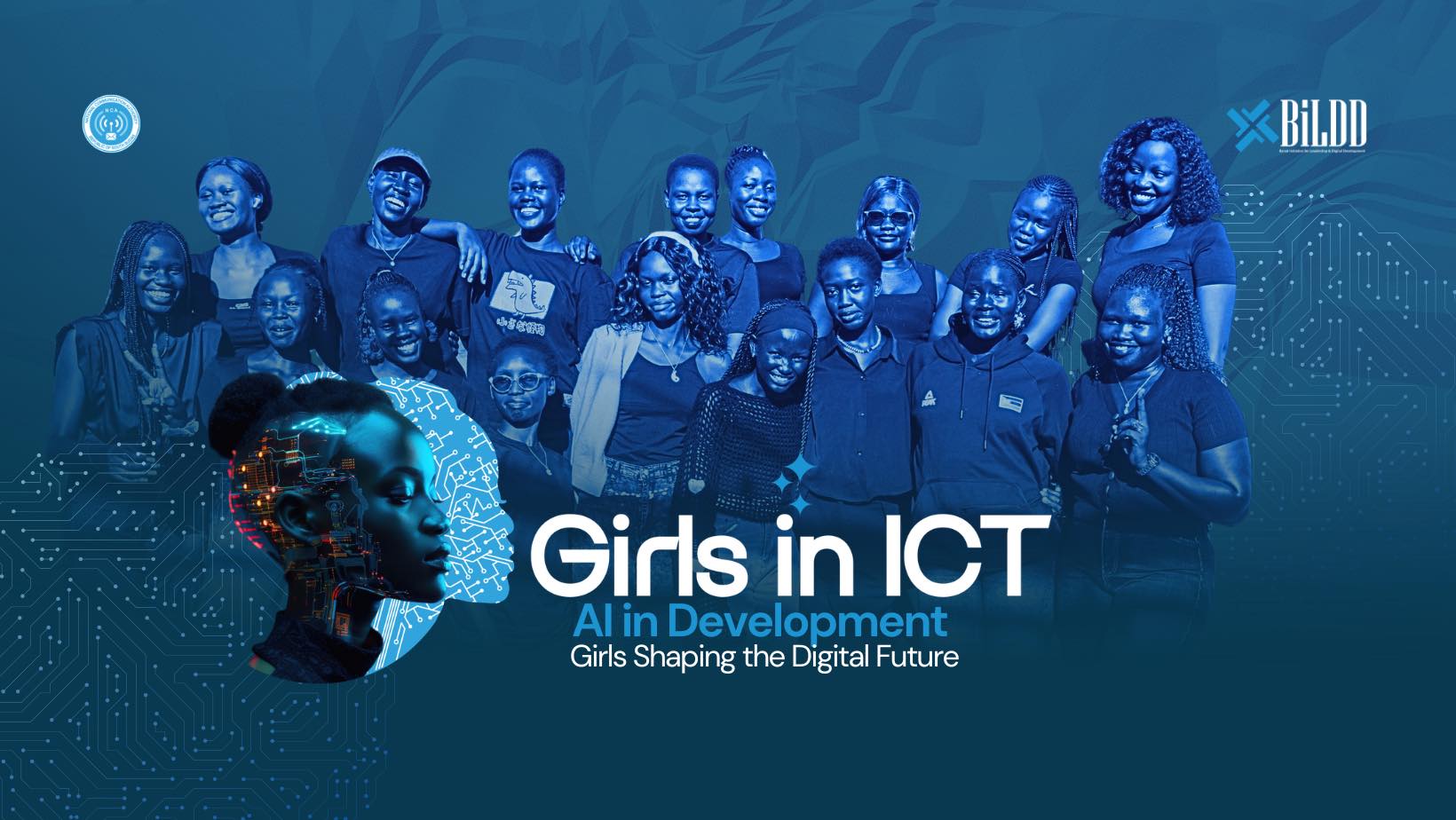
Every year, the world marks International Girls in ICT Day. In 2026, it is celebrated under
the theme: AI in Development, Girls Shaping the Digital Future. The message is clear: Girls
should not only use technology, they should help build it. For a fact, where girls are missing, something is missing in whatever change we are attempting to create.
Technology is not neutral: It reflects the people who design it. When girls and women are
underrepresented in fields like AI, their lived experiences are left out; and when that
happens, the tools we build, risk becoming incomplete. They can overlook real needs,
reinforce bias, and limit who truly benefits from innovation.
Encouraging girls into ICT is not just about numbers. It is about perspective.
It is about who gets to decide how data is collected, how problems are solved, and whose
realities are considered. It is about building systems that understand communities more
deeply, and solutions that serve more than just a few.
When girls step into these spaces, they bring different ways of thinking. They ask different
questions. They challenge gaps that others might not even see. That is how stronger, more
human centred technology is built.
In South Sudan, efforts like the Banat Initiative for Leadership and Digital Development are
working to change this narrative. Creating pathways through education, mentorship, and
access, they are opening doors for more girls to see themselves in technology.
Because an inclusive digital future does not happen by chance. It starts with who is given
the opportunity to learn, to lead, and to create.
So when you look at that classroom of 46 students and only 4 girls, what do you see?
In your opinion what would it take to balance that number?